

For commercial property owners in Southlake, TX, a roof coating represents a significant investment in building protection and energy efficiency. But like any roofing system, coatings do not last forever. They degrade gradually, and the signs of failure are not always obvious until the damage underneath has already begun. Knowing how to evaluate whether your roof coating is still doing its job is one of the most practical skills a property owner or manager can develop.
Anderson Industrial Roofing helps commercial clients throughout Southlake assess coating performance before small issues become expensive structural problems. This guide walks through the key indicators that your roof coating is working, wearing down, or has already failed.
For more helpful tips, contact Anderson Industrial Roofing at 866-949-8016 and schedule a consultation.
How to Tell If Your Roof Coating Is Still Performing
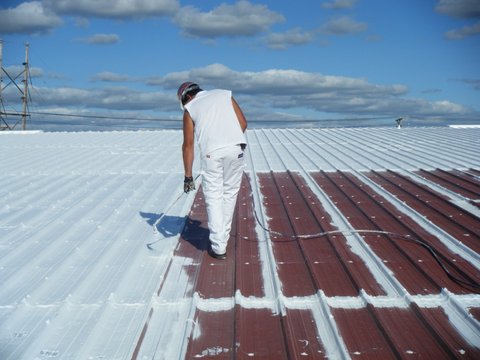
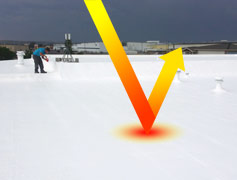
Before identifying failure, it helps to understand what a properly performing roof coating provides. A quality coating forms a seamless, flexible membrane over your existing roof surface that reflects UV radiation, seals out moisture, and accommodates minor structural movement without cracking. It should maintain consistent adhesion across the entire surface, direct water toward drains without pooling, and show no visible separation from the substrate beneath it.
In Southlake’s climate, where summer temperatures routinely push roofing surfaces well above 150 degrees and storm seasons bring heavy rainfall, a roof coating earns its value by managing both heat and water simultaneously. When it stops doing either effectively, the roof beneath it becomes vulnerable.
Visual Signs Your Roof Coating Is Failing
The most accessible inspection method is a visual walkover, and several warning signs are visible to a trained eye without specialized equipment. Chalking is one of the earliest indicators. As UV exposure breaks down the coating’s binder, the surface begins to powder and fade. Some chalking is normal over time, but heavy chalking across large sections means the coating has lost much of its reflective capacity and moisture resistance.
Bubbling or blistering indicates that moisture or gas has become trapped between the coating and the roof surface below. This is a serious sign because it means adhesion has broken down in those areas, allowing water a pathway into the roof assembly. Cracking and alligator-patterned surface texture signals that the coating has lost its flexibility and can no longer expand and contract with temperature swings.
Visible seam exposure is another red flag. A roof coating is designed to bridge and seal seams in the underlying membrane. When seams become visible through the coating layer, protection has thinned to the point of failure in those locations.
Performance Problems That Go Beyond What You Can See
Not all roof coating failures are visible from a rooftop walkover. Standing water that remains on the surface 48 hours after rainfall suggests the coating has developed low spots or that drainage has been compromised by coating buildup around drains. This is significant because prolonged ponding accelerates coating breakdown and places hydrostatic pressure on the seams and membrane beneath.
Interior signs matter just as much. Unexplained increases in cooling costs often indicate that a reflective coating has degraded and is no longer deflecting solar heat gain effectively. If your energy bills have climbed without a corresponding change in occupancy or equipment, the roof coating’s thermal performance deserves a closer look. Anderson Industrial Roofing performs thermal assessments that identify where coating performance has degraded even when surfaces appear intact from above.
When to Call a Professional for a Roof Coating Evaluation
Visual inspections by property owners are a useful first step, but they have limits. A professional evaluation from Anderson Industrial Roofing gives Southlake commercial property owners a complete picture of coating conditions, including adhesion testing, moisture scanning, and an honest assessment of whether recoating or full flat roof replacement is the more cost-effective path forward.
 Roof Coating Experts
As a general rule, roof coatings should receive a professional inspection twice a year and immediately following any significant hail or wind event. Catching coating failure early preserves the roof assembly beneath it and keeps your options open. Once moisture penetrates to the insulation and deck, the conversation shifts from recoating to full replacement, and the costs shift accordingly.
To learn more about roof coating services, call Anderson Industrial Roofing at 866-949-8016 and speak with an expert.
FAQ
How long does a commercial roof coating typically last before it needs reapplication? Most commercial roof coatings have a functional lifespan of 10 to 15 years depending on the product type, application quality, and environmental conditions. In Southlake, TX, where UV intensity and temperature extremes are significant, coatings on the lower end of that range are common without proper maintenance. A professional inspection around the 8-to-10-year mark gives property owners enough lead time to plan recoating before failure occurs rather than responding to it.
Can a new roof coating be applied directly over a failing one? In some cases, yes, but it depends entirely on the condition of the existing coating and the substrate beneath it. If the current coating has maintained adhesion and the underlying roof assembly is dry and structurally sound, recoating over it may be viable. If there is widespread blistering, delamination, or moisture in the insulation layer, the failing coating must be removed and any damaged substrate addressed before a new coating is applied. Anderson Industrial Roofing evaluates each roof individually rather than applying a one-size-fits-all approach.