

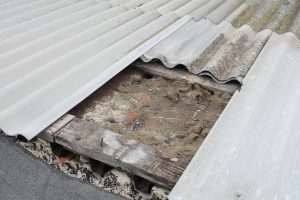
Every commercial roof follows a lifecycle, but many property owners only engage commercial roofing services at two points: installation and emergency repair. Planning ahead for each phase can reduce surprises, and a clear written scope makes it possible to compare contractors fairly.
Anderson Industrial Roofing, family owned since 1993 with more than 30 years of experience, works with Grapevine commercial property owners on single-ply systems (TPO, PVC and EPDM), metal roofing, new construction roofing and silicone coatings and restoration. To discuss your roof, call 866-949-8016.
Commercial Roofing Services Over the Roof Lifecycle
Getting the most from a commercial roofing investment means understanding the phases of the roof’s life and what services each one calls for.
New Installation and the Warranty Period
The lifecycle begins at installation. The priority is correct installation and a clear understanding of warranty coverage. Commercial roofing proposals may include separate manufacturer and contractor warranty documents; neither should be assumed without reviewing the specific written terms. Each can carry maintenance requirements, and failing to follow them may affect coverage.
Document the installation: membrane type, insulation, fastener pattern, flashing details and drainage configuration. This baseline record helps when evaluating future repairs or planning replacement. A post-installation inspection within the first year can confirm that no installation issues have surfaced.
The Active Maintenance Phase
After installation, the roof is generally in its maintenance phase, when the goal is to protect the investment through consistent upkeep. Inspections twice a year, often in spring and fall, can catch minor issues before they become expensive failures. In North Texas, spring checks look for winter and early hail damage, and fall checks prepare the roof for another season.
Common findings include flashing separations, sealant deterioration around penetrations and early membrane wear near rooftop equipment. These are usually less costly to address when caught early. A written maintenance scope should state what is inspected, how often, and how findings are reported.
Mid-Life Assessment and Strategic Decisions
As a roof ages, the focus shifts from routine upkeep to assessment and planning. A thorough assessment commonly checks for subsurface moisture, evaluates the condition of the insulation and deck, and considers how much service life the membrane has left. Ask any contractor which methods they will use on your roof. The findings point toward one of three paths: continued maintenance, a coating to extend service life, or planning for replacement.
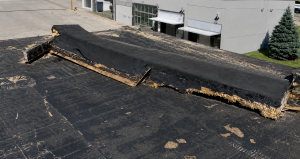
A roof coating can be considered when the existing roof is dry and structurally sound. How much life it adds depends on the roof’s condition and the system used, so ask for that in writing rather than relying on a general figure.
End-of-Life Planning and Replacement
No commercial roof lasts indefinitely. When damage is widespread, corrective work is no longer practical, or repeated repairs fail to solve problems, replacement may become the practical decision after investigating whether wet insulation or deck damage is local or extensive. A planned replacement is easier to schedule and to protect an occupied building than an emergency one. Owners who kept inspection records arrive at the decision with documentation of the roof’s history, which also supports insurance and warranty discussions.
Comparing Contractors and Written Scopes
At any phase, two bids can show very different totals because they cover different work. Use this side-by-side checklist to compare each bid line by line:
| Bid item | What a comparable bid states | Follow-up question |
|---|---|---|
| Services | The specific services priced and the roof areas covered, such as inspection, maintenance, coating, single-ply, metal or new construction | Does the contractor itself perform every service in the scope? |
| Investigation scope | How the roof was evaluated, including moisture checks and layer count, and what was found | What was actually inspected, and what was assumed? |
| Material and system specification | Membrane or panel type, thickness, insulation, attachment method and manufacturer | Can you name the manufacturer and product line for each component? |
| Exclusions | Items not included, such as deck repair, wet insulation, permits or interior protection | How will extra work be priced if it is found once work starts? |
| Scheduling | Start window, duration, phasing and weather contingencies | What happens to the schedule if weather interrupts the work? |
| Occupied-property protection | Access routes, staging, noise and debris control, and notice to occupants | How will tenants and staff be protected during the work? |
| References | Comparable commercial projects the owner can ask about | Which similar projects can you describe, and can I speak with those owners? |
| Warranty responsibilities | Who provides the manufacturer warranty and who provides the workmanship warranty, with terms and conditions | What does each warranty cover, who is responsible for each, and what voids it? |
Follow-Up Questions That Reveal Incomparable Bids
- Different investigation: A bid based on a moisture survey and one based on a visual look assume different roofs.
- Different systems: A thinner membrane, different insulation or a different attachment method changes both price and performance.
- Hidden exclusions: A low total may omit deck repair, wet insulation, permits or interior protection.
- Unclear warranty: Manufacturer and workmanship warranties are separate, and either may carry conditions that void coverage.
- Missing schedule or occupant plan: Ask how the work will be phased and how the building stays usable.
Ask each contractor to revise its bid so the scopes match, then compare totals. A lower price is meaningful only after material specifications, exclusions and work scope are compared on equal terms.
Expert Commercial Roofing Services
Anderson Industrial Roofing helps Grapevine property owners plan roofing work, including system selection suited to the building’s use and scheduling that takes business operations into account. See the commercial roofing estimate page, or call 866-949-8016 to speak with the team.
Frequently Asked Questions
How often should Grapevine commercial property owners schedule professional roof inspections?
Twice a year, in spring and fall, is a common recommendation. Roofs with older membranes, hail history or heavy rooftop equipment traffic may warrant more frequent checks.
Can a roof coating extend a commercial roof’s life?
It can when the roof is dry and structurally sound. An assessment determines whether a roof qualifies, and the expected benefit should be stated in the written scope.
What documentation should a property owner keep throughout a roof’s lifecycle?
Installation records with membrane and insulation details, warranty documents, inspection reports and repair invoices. These support warranty claims, insurance discussions and replacement planning.
How do I compare two commercial roofing bids?
Match the scopes first: investigation, system specification, exclusions, schedule, occupant protection and warranty responsibilities. Then compare totals once each bid covers the same work.