

Choosing a commercial roofing system for a Dallas-Fort Worth building starts with understanding what type of roof you have, how it is performing, and whether the project calls for repair, restoration, retrofit, or replacement. Anderson Industrial Roofing installs commercial single-ply membranes, metal roofing, and silicone roof coating and restoration systems. If your facility needs a roofing repair or replacement, the right option should follow an assessment of the existing roof rather than a one-size-fits-all material recommendation.
1. Thermoplastic Membrane Roofing: TPO and PVC
TPO and PVC are thermoplastic single-ply roofing membranes commonly used on flat and low-slope commercial buildings. The sheets are joined with heat-welded seams, creating a continuous membrane when the system is installed and detailed correctly. Anderson Industrial Roofing currently offers TPO and PVC as part of its single-ply membrane services.
Both materials can be available in reflective colors that reduce solar heat absorption at the roof surface, but reflectivity should not be treated as a guaranteed utility-cost reduction. Building insulation, roof assembly, HVAC performance, shade, occupancy, and operating conditions all affect the result.
TPO and PVC are also not interchangeable. Product chemistry, reinforcement, attachment method, seam preparation, flashing details, and compatibility with existing materials can differ. If an existing roof needs repair or future coating work, identifying the exact membrane matters before selecting adhesives, primers, patches, or other restoration materials.
2. Metal Roofing and Retrofit Applications
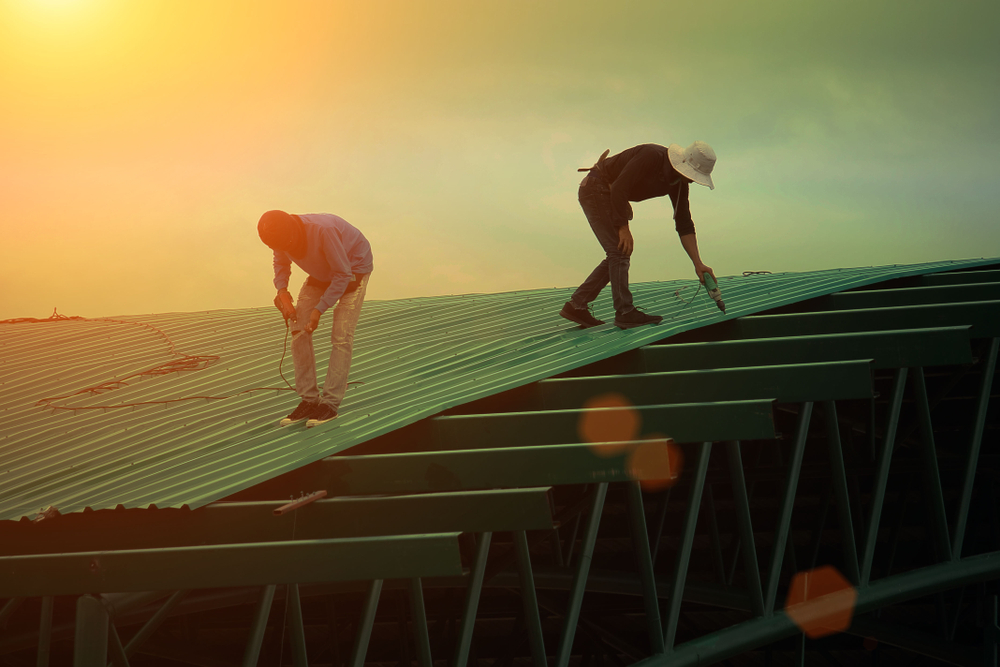
Metal roofing is a different type of commercial roof assembly from a single-ply membrane. Depending on the building and project design, metal can be used for a new roof, replacement, or retrofit application. Anderson Industrial Roofing currently supports commercial metal roof installation and replacement.
A metal roof can provide a durable exterior surface, but it is not maintenance-free. Fasteners, seams, penetrations, flashings, sealants, coatings, drainage, and areas around rooftop equipment still need inspection over time. Existing corrosion, movement, attachment problems, and water entry should be evaluated before deciding whether a retrofit is appropriate.
For North Texas properties, hail, wind, heat, and repeated thermal movement can all influence metal-roof performance. The practical question is not whether metal automatically lasts longer than every other option, but whether the specific assembly, attachment method, detailing, and maintenance plan fit the building and its exposure.
3. EPDM Rubber Membrane Roofing
EPDM, or ethylene propylene diene monomer, is a synthetic rubber roofing membrane. It is a thermoset material, not a thermoplastic like TPO or PVC. EPDM sheets may be fully adhered, mechanically attached, or ballasted depending on the roof design, and seams are typically completed with compatible tapes or adhesives rather than hot-air welding.
That material difference matters during service work. A repair method intended for a thermoplastic membrane should not automatically be used on EPDM, and an EPDM repair should account for membrane condition, seam type, surface preparation, previous repairs, and moisture below the roof. Anderson Industrial Roofing installs and services EPDM as part of its commercial membrane scope.
Low-slope commercial buildings also need a roof system designed for the slope and drainage conditions involved. Standard shingle roofing serves a different application, so property owners should not compare shingles and low-slope membranes as if they are direct substitutes for the same roof geometry.
4. Silicone Roof Coatings as a Restoration Option
A silicone roof coating is different from installing a new TPO, PVC, EPDM, or metal roof. It is a restoration option applied over a suitable existing roof after the roof has been evaluated, repaired, cleaned, and prepared for the coating system.
Coating can add a reflective, weather-resistant surface and may reduce the amount of tear-off required compared with full replacement. Suitability depends on the existing roof, trapped moisture, drainage, attachment, substrate condition, previous coatings, repairs, and adhesion requirements. A coating should not be used to cover saturated insulation, structural problems, widespread membrane failure, or defects that need corrective work first.
For that reason, coating should be compared with repair and replacement based on the actual roof condition rather than a universal percentage of cost savings or service-life extension. Some roofs are good restoration candidates. Others need a larger repair scope or replacement before the owner can expect reliable long-term performance.
How to Compare Commercial Roofing Options
Facility managers should compare more than material names. Roof slope, drainage, deck condition, insulation, existing moisture, rooftop traffic, chemical exposure, attachment requirements, business disruption, maintenance expectations, warranty terms, and future capital plans can all change the recommendation.
The useful distinction is also between project types. TPO, PVC, and EPDM are membrane systems. Metal can be a new-roof, replacement, or retrofit assembly. Silicone coating is a restoration treatment for an existing roof that qualifies. Keeping those categories separate makes bids easier to compare and reduces the risk of choosing an option that does not match the building.
Anderson Industrial Roofing has provided roofing service since 1993 and currently offers commercial membrane systems, metal roofing, coatings, repair, restoration, and replacement. Contact Anderson Industrial Roofing or call (866) 949-8016 to discuss which approach fits your Dallas-Fort Worth facility.
Frequently Asked Questions
What is the main difference between TPO and EPDM roofing?
TPO is a thermoplastic membrane joined with heat-welded seams, while EPDM is a thermoset synthetic rubber membrane whose seams typically use compatible tape or adhesive.
Is a metal retrofit the same as a single-ply roof replacement?
No. Metal retrofit and single-ply replacement use different assemblies, attachment methods, detailing, and maintenance requirements. The existing building and roof condition determine which approach is suitable.
Can every commercial roof be restored with silicone coating?
No. Coating suitability depends on moisture, drainage, attachment, substrate condition, compatibility, and required repairs. A failing or saturated roof may need a different scope.
How should I choose among commercial roofing systems?
Start with a roof assessment and compare slope, condition, moisture, drainage, building use, maintenance needs, warranty terms, and long-term plans rather than choosing by material name alone.